The Gospel of Bulking
.jpg)
Bulking is like chasing women; you can mess it up royally, and if by some miracle something happens despite your clumsiness, the result will probably reflect that. People spend years trying to pick up girls they've been fantasizing about since they were 9, instead of truly paying attention and learning what women need, what they want to hear, what they expect from a man, how to treat them, and what to say to them to get their panties off in the shortest possible time. Tell her what she wants to hear and make her feel like a woman. Be confident, make her believe she's special, and impress her with your style, if you have any, and if you're not a soft-dicked faggot. Learning to play the instrument called 'woman' is just as rewarding as learning the rules of bulking, which, if followed, will prevent you from becoming a big, fat slob, because bulking is far from just mindlessly stuffing yourself with all sorts of nonsense and going to the gym four times a week. It's a more complex process with rules that must be followed, otherwise, you can go to Facebook and like groups like "I haven't seen my dick in years," "I have sex with my shirt on," and "I turn off the lights before sex."
Let's say your body is an apartment. If you want to renovate or remodel it, it's a good idea to be aware of some basic structural solutions that won't lead to the entire house collapsing due to a flawed idea or poorly executed work. Your body is an apartment that, if worn down, needs renovation (weight loss), but renovation only brings it back to its initial state. We've already gone through that, and we can start upgrading the apartment (muscle building). I can only hope your foundation isn't so messed up that it needs to be demolished because if something is in truly bad shape, it's usually not worth bothering with; demolition is the best solution in such cases. However, for a body, unfortunately, we can't talk about that, so we're stuck with the principle of working with existing materials and completely rethinking all the information we've acquired about bulking, so we don't try to build the bulking housing estate on an already dilapidated foundation. I know there are a lot of analogies, so I'll translate it for the mentally challenged too. Erase everything you've read, heard, or learned about bulking from your mind, forget your friend's nonsense, the advice of self-proclaimed clowns at the gym, and start with this post on your shoulders so that if you encounter bulking again in the future, you won't be completely clueless about the topic and won't believe everything that comes your way. I'm warning you, this will be a very difficult and complicated process that requires time, a fair amount of money, and much, much more perseverance and willpower than weight loss, and that wasn't a weekend at Disneyland either. Let's sail out of this sea of nonsense because there are too many icebergs and the captains are incompetent.
The Law
If you eat bad food, sooner or later you'll become bad. If you eat good food but too little, you'll be thin and lean. If you eat good, quality food in large quantities, you'll be lean and muscular. During workouts, train intensely with low reps and heavy weights, and keep your hormone levels high through your diet. This is the first gospel of the bulking bible.
You really need to remember this because it will be the foundation of everything. You need to eat more quality food, not just anything. I recently started my bulking program, and you'll see that I'll be eating almost exactly the same foods I ate to lose 14 kilos, just much more of them. Instead of half a bag of rice, one and a half; instead of 150g of chicken and fish, 400g; instead of 2 scoops of protein powder, 3-4, and so on... So when I say bulking requires money, this is partly what I mean, because quality bulking can only be achieved this way. Large quantities of quality food, alongside workouts that involve continuously and gradually increasing weights. Bulking workouts are much harder than simple cutting programs because you constantly have to push beyond your upper limits to give your muscles the stress they need to grow, and that growth is fueled by proper food. Inadequate nutrition is one of the most critical aspects of muscle gain. That's why if you see big, bald, muscled guys on the street, they are rarely well-defined, and that's because they work with heavy weights, but their diet is terrible, so they just become big, shapeless masses. We don't want to be strong; we want to achieve the most sculpted and defined muscles possible, which will, of course, also make us strong because this process entails that too, but there are huge differences between muscle and muscle. Anyone who just wants to be strong should become a lumberjack or a miner.

When bulking, we need to provide our bodies with macro and micronutrients, minerals, and enzymes, which I won't bore you with now, especially myself. The point is, when bulking, you should follow this distribution, depending on your body type and daily energy intake, of course.
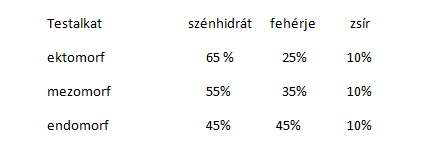
In bodybuilding, just like with weight loss, the greatest emphasis will be on divine protein. This blog is solely about clean and chemical-free weight loss and bodybuilding, as I've written before, but it's good to clarify, especially when it comes to bulking. That's why the values provided here are for someone bulking without performance-enhancing drugs. If you're not injecting yourself with any crap, you shouldn't push much more than 1.7-2 grams of protein per kg, because you'll ruin your kidneys and have serious problems with sex. So, if you weigh 85 kg, multiplied by the maximum value of x2, that's 170 grams of protein needed, and going above that is unnecessary and unhealthy. If this isn't clear on the first read, you can go ahead and get yourself checked out for percentages.
I don't want to bore anyone with what glycemic index foods can be eaten, because if I wanted a brain aneurysm, I'd just sit in on Professor Csernyák's analysis class, and besides, you wouldn't understand what I'm talking about. Energy needs can vary greatly from person to person, and this is where what I've been babbling about for weeks comes back: it's impossible to generalize about workouts and programs. If we want to bulk up, the nutritional value of foods and drinks must be the guiding principle. Arrange your meals to meet your target calorie and protein intake. If you want change, you have to change your entire lifestyle and eating habits, so it doesn't work to live in one rhythm and suddenly try to fit bulking into it. No one has ever succeeded that way. Bodybuilding is not just about going to the gym. You can get to a certain level with just workouts, but if you don't eat and sleep properly, you'll fall flat on your face very quickly and won't make any progress. It's like only dating a girl but never having sex with her.
Eating and regeneration (sleep) are just as important, if not more important, than the workout itself, because muscles grow during sleep, not during the day; it's good to know that. You have to treat this whole thing as work, because if we want to achieve results, and we do, then bodybuilding cannot be a hobby. Bodybuilding doesn't end when you leave the gym. Behind a lean and muscular body is inhumane work, preceded by a prolonged process that requires serious attention and a strict lifestyle. That's why we don't choose foods based on their taste. This is a program that's not about taste or being delicious. This is what I preach when people come to me asking where to get chocolate or pistachio protein shakes because they read that they exist. We're not going for ice cream at the corner, goddammit, we're bulking and cutting. So, the most important thing won't be the taste, but how much energy is in a given food, and if that energy is in fish, then you have to eat the fish and not bother with which fish doesn't taste like fish. I'm not kidding, I got this question, obviously from a girl regarding weight loss, but it applies equally to bulking. The most nutrients in a given food with the least amount of crap. I often encounter situations where I take someone on, tell them they need protein, and they say they have some at home. Great. When ignorance mixes with the "I have supplements at home" spiel, that's one of the worst combinations. I've received emails about what people have at home. I got incredible numbers, and I can tell you it's a pile of crap, it doesn't matter, because if they have it at home, why would they buy more? Sooner or later, they'll realize why it's not good. Everyone learns from their own mistakes, and unfortunately, that's just as true for a 29-year-old adult as it is for a 6-year-old in kindergarten.
There are huge differences not only in supplements. For example, 100g of carrots contains 80 kcal of energy, but oatmeal contains 386 kcal. Bananas have 105 kcal, but peanuts have 692 kcal. So, it really matters which food's 100 grams we consume, because 1 calorie is not equal to 1 calorie. It's not like asking what's heavier, 1 kg of iron or 1 kg of goose feathers. How many nutrients are in 1 kcal of energy, how many useful and USABLE nutrients for the body are in 100g of a certain food. That's why you can eat as much as you want at Burger King, but you'll still be hungry after an hour, because with those foods, you might have consumed 5000 calories, but if there are no valuable and usable nutrients for the body, then after 1 hour, it will demand food again until it gets the right enzymes, minerals, and vitamins. Your body will get the necessary nutrients faster from 100g of cottage cheese and 1 tomato than from 45 bags of chips.
I would like to call everyone's attention to the fact that food can be consumed not only in solid form, as really tasteless and awful foods are much easier to drink than to eat (let someone dare to ask how to drink it). You can blend oatmeal, cottage cheese, fruits. For example, I detest cottage cheese and muesli, so that's how I eat them. Add 2-3 dcl of skim milk to the hated food, add a scoop of protein powder or weight gainer, and then the situation will be quite different; it can even contain up to 1500 kcal of energy. But be careful, never eat raw eggs, not even blended. Oh, yes, the best bulking foods are meats, pasta, rice, eggs, cottage cheese, and dairy products.
Energy intake can vary greatly from person to person. I recommend that in the initial phase of bulking, aim for 35-40 kcal/day/kg. So, if you weigh 80 kg, eat 2,800-3,200 kcal per day. This is the baseline, but it can also vary by body type. The main thing is to increase your portion by +200 calories daily until your weight starts to go up. This is primarily for ectomorphs. Aim to gain 8-10 kg of quality lean muscle, meaning increase your current body weight by a maximum of 12% with muscle, but make it muscle, not fat, dammit. This is still considered aesthetically pleasing; don't go beyond that, not that anyone could maintain it long-term anyway. However, it is STRICTLY FORBIDDEN to start bulking until you have completed a cutting program. Because if you start as an obese mess, thinking you'll turn fat into muscle, I'm telling you now it won't work, and if you do, you'll look awful. But if you don't believe me, go ahead and try it...
Before I delve into the importance of supplements, I would like to reiterate that the LifeTilt blog is against all artificial junk, which is the most common topic when it comes to bulking. Stay far away from creatines, oxides, fat burners, diuretics, and all sorts of nitric-based queer stuff, but especially the garbage sold in ampoules, because it's not worth destroying yourself and worrying years later with one kidney how many people might be ahead of you on the transplant waiting list.

I'm not saying you can't achieve results without supplements, but it's incredibly difficult and requires an investment of energy that very few people are capable of, perhaps not even them. If you can't get the necessary nutrient intake for your body from traditional foods, choose protein first, and if absolutely necessary, weight gainer powder, and supplement your diet with them. However, it would be a huge mistake to think that these alone would do anything without workouts and diet. These are not miracle drugs; these preparations are merely foods and do not guarantee any results on their own. If you don't eat, train, and sleep properly, they won't yield any results. You also need to know how many calories you're taking in from traditional meals and how many from supplements. Once you have the results, compare them to your needs. If you haven't reached the required intake, you need to increase it. You can eat more or consume more supplements. Consume as many supplements as you need for progress, and your muscle growth will almost certainly begin. You shouldn't choose supplements you can afford or whose packaging you like, but rather ones that contain the highest possible number of ingredients you need to achieve quality muscle. As I mentioned, this blog is written for those above a certain existential level because this lifestyle requires some financial background. You can't be stingy with proteins and not buy the expensive ham because you won't get results, and your money will be wasted. These foods simply cannot be replaced. You can't buy chicken thighs instead of chicken breast fillet, and you can't buy carp instead of salmon. I received a few letters asking what to do if they have no money at all to buy diet foods but want to change and diet. My primary answer would be: earn more.
But since we're here, let's quantify how much this bulking program will specifically cost me per month.
Gym membership: 15,000, Protein: 7-9,000, Vitamins: 3-4,000, Amino Anabol: 12,000, Food - drinks per week: 12-18,000, which is a minimum of 60,000 per month.
So, in total, roughly 90,000 – 100,000 forints, just for yourself and your program. It's good for everyone to be aware of this, and now back to the nutritious part.
Those who struggle seriously with gaining weight (first, go to hell for being able to eat anything and not gain weight) should take powders with lower protein and higher carbohydrate content, e.g., 10-20 g/100 g such as Buildup, Cellforce, CellMax, Supreme Mass. Normal, non-screwed-up men, on the other hand, should take substances with higher protein content (30-40 g protein/100 g Whey Fusion, Whey Isolate) or protein powders that contain more than 70% protein, for example: 100% ISO Whey, Whey Protein Professional. These are more for muscle definition. The guiding principle will be the composition of the preparations, not the instructions for use; it may happen that you will consume twice as much as stated on the instructions. Consume supplements before training, but never during it. It is best to eat 40-50 g of carbohydrates half an hour before training, and 100 g of carbohydrates and 30 g of protein after training. Those who want to take anabolic substances, like me, should take an appropriate amount for their body weight 20 minutes before training. For me, that's 6 tablets, and another six 20 minutes after starting the workout. Pay attention to vitamin intake and constant hydration. Drink at least 2-3 servings of shakes daily. Protein and weight gainer powders dissolved in water are easier to digest, but they taste so terrible with water that you'll puke your guts out. Before going to sleep, always drink your shakes with milk, because milk is harder to digest and also contains casein, which is only absorbed over 4-5 hours, ensuring your body's protein supply overnight.

Workouts should be short but very intense, with rest periods of half a minute or less. There's really no time to mess around and chat with friends, or arrange a blowjob with the receptionists after work. Bulking workouts, if done right, are the most brutal. The emphasis is on low repetitions with heavy weights. Ten or fewer repetitions are ideal, or the reverse pyramid training method (10-8-6-5). When bulking, we never go above 10 repetitions under any circumstances when working with weights. Cardio workouts are just as important here, but the goal is no longer to run as much as possible and accumulate miles, but to run shorter distances extremely fast and very intensely. Push 4-6 km like a peasant, running the fastest possible kilometers. And after workouts, you need carbohydrates and protein for muscle recovery as soon as possible, don't forget that.
I will also upload training plans, and I will publish my entire training program. The Sound is breathing down our necks, and there are only 14 days left, meaning the stages are already being built, and the first lights will soon be lit in Zamárdi. If I were a little rascal right now, I’d cry from joy. As for me, this is my current state, but I will only start my real 10-week program after Sound. This is just a warm-up period. This post turned out a bit long, but it's a big topic that requires this much space. I hope you read through this crap all at once, and now your eyes are really wanting to pop out. I'm telling you in advance that it's completely pointless to throw a tantrum about this on Facebook because there won't be a blog design change. However, if the queers find the blog because of the pictures, then unfortunately I'll have to burn this whole thing down.