

BLUE ZONE - NICOYA
Nicoya, Costa Rica, Guanacaste region
Area 310 km2 Population 47,000
Number of centenarians in Nicoya: 109, supercentenarians: 22
Life expectancy: men 81 years, women 83 years
In 2002, demographer Luis Rosero Bixby, while examining Central American demographic data, noticed a region in Costa Rica called Guanacaste, where people lived on average almost 6.2 years longer than in the country's capital, San José. What made the area even more interesting was the extraordinarily low number of cancer cases. This was 3 years after the discovery of the Sardinian blue zone, but still 2 years before the National Geographic blue zone discovery teams set out. However, the existence of blue zones was already an agreed-upon fact among demographers by then.
Bixby knew he had found another blue zone and contacted Michael Poulin, who, on the one hand, had the world's largest demographic database, and on the other, advised Bixby to be cautious, as what appeared to be a blue zone might not necessarily be one, especially if these results came from a Central American country plagued by serious political crises. At that time, Poulin was preparing his extensive worldwide expedition on behalf of Nat Geo, the goal of which was to find all the blue zones on Earth. By then, this expedition was no longer just about observing centenarians, but about understanding the biological mechanisms of human life extension and, more generally, the long-term healthy functioning of the human body without alterations, based on the world's blue zones. This marks the beginning of the longevity era, everything can be traced back to these years.
Crete, Mallorca, Georgia, Azerbaijan, Venezuela, Laos, Afghanistan. These were areas that were potential blue zone territories, but later it turned out that the numbers could not be substantiated in reality. The thoroughness and obsession of Poulin's research are well exemplified by the fact that the Congo Basin and Sudan were also considered potential blue zones, which no one truly understood. But Poulin stated that long life should not only be measured in years lived, as well exemplified by the villages of the Marrah Mountains in Sudan, such as Gulobei and Kammbuna, where Sudanese people live significantly longer than in other areas of Sudan. "Significantly longer" here means that the average life expectancy in Sudan is 58 years, but for those living in the Marrah Mountains, this figure is 69 years. This is a striking difference, but ultimately, the investigation of these areas was abandoned, partly due to the civil war conditions in Africa, the inaccuracy of the numbers, and the safety of the research teams.
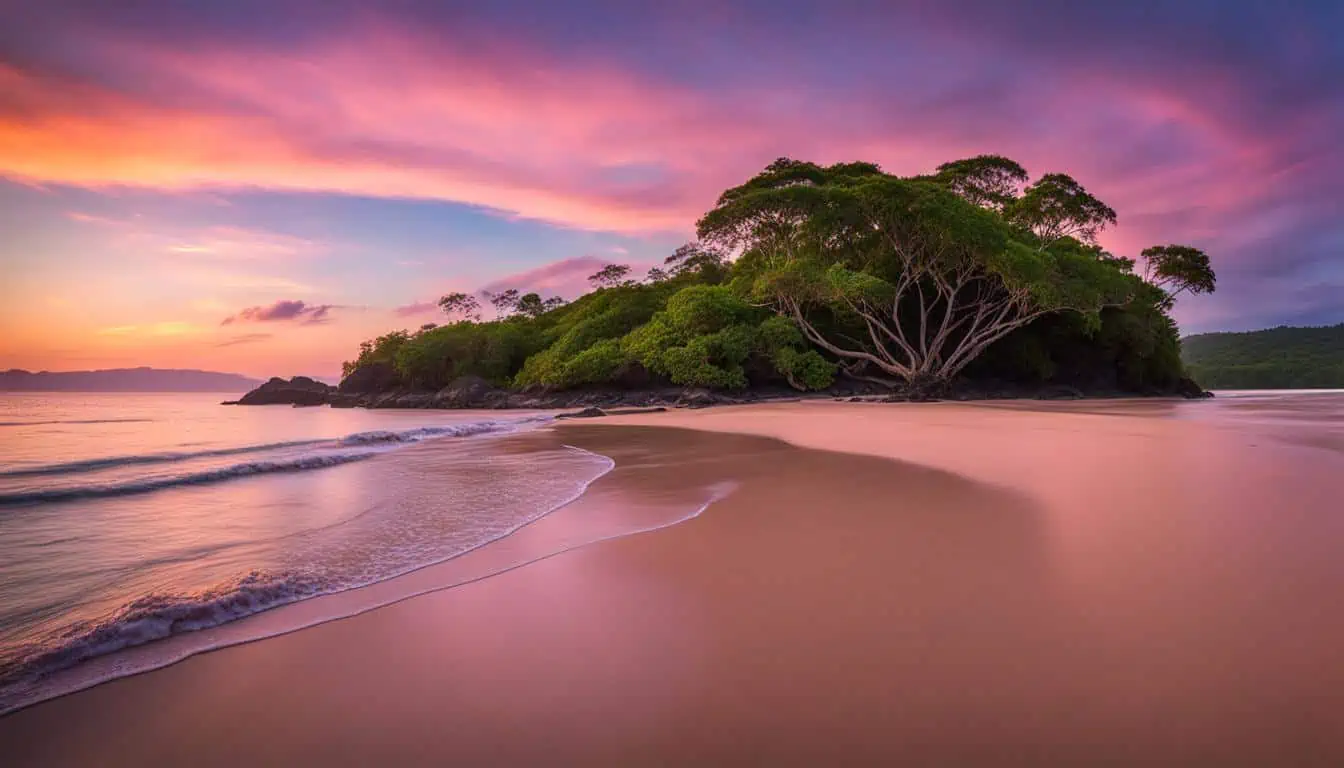
It's not as if Central America is a library-like environment, but Costa Rica is considered particularly safe compared to the crazy Mexico, Honduras, or the completely broken El Salvador. I'm not saying that Costa Rica didn't have a civil war in 1941 that claimed 2,000 lives, but first of all, the whole world was a zoo in '41, and secondly, in Mexico, two thousand dead is an average Saturday night, so I don't think we should get into that now. What we should definitely get into, however, is that Costa Rica had three particularly strong arguments for making it onto the blue zone list. One was that the Costa Rican government had left the statistical and census office in peace since 1883, and had even run it quite honorably, which in itself is an unimaginable miracle in a region where the statistical office is directly connected to voter list databases. For Bixby, Nicoya was a statistical goldmine, as he "only" had to check the birth and death years of voters between 1880 and 1905, thus immediately, and with reliable government-level data, the assumption that people on the Nicoya Peninsula truly live significantly longer than the average in other parts of the country was verified. This was precisely the problem for Bixby and Poulin – who had returned disappointed from Venezuela at the time – that although they received longevity news from many potential blue zone locations, most of them were statistically unsubstantiated due to unstable political systems.
But everything checked out in Nicoya, so 8 months after Bixby's arrival, National Geographic sent an expedition to the northwestern territories of Costa Rica to confirm they had found the world's second blue zone. I could say the rest is history, but what else could I say when the people living there are truly almost a part of history? Bixby and his team didn't know it then, but we do now, that among all blue zones, people in the Guanacaste region of Nicoya live the longest.
What they did know for sure, however, was that besides a long life, there had to be something else in Nicoya that made this region truly special, as Pes, Poulin, Bixby, and the Costa Rican government's data all had one thing in common. This was the extraordinarily low number of cancer cases. In Costa Rica, the leading cause of death is stomach cancer, which is the most frequently diagnosed disease not only in Costa Rica but also at a regional level. When I say region, I mean a 4200 km long strip extending from Texas to Colombia, and this is precisely what made the research in Nicoya special: here is a country where stomach cancer is inherently very high, but within this country, there is an area of just over 300 km2 where the number of cancer cases is lower than anywhere else in the region.
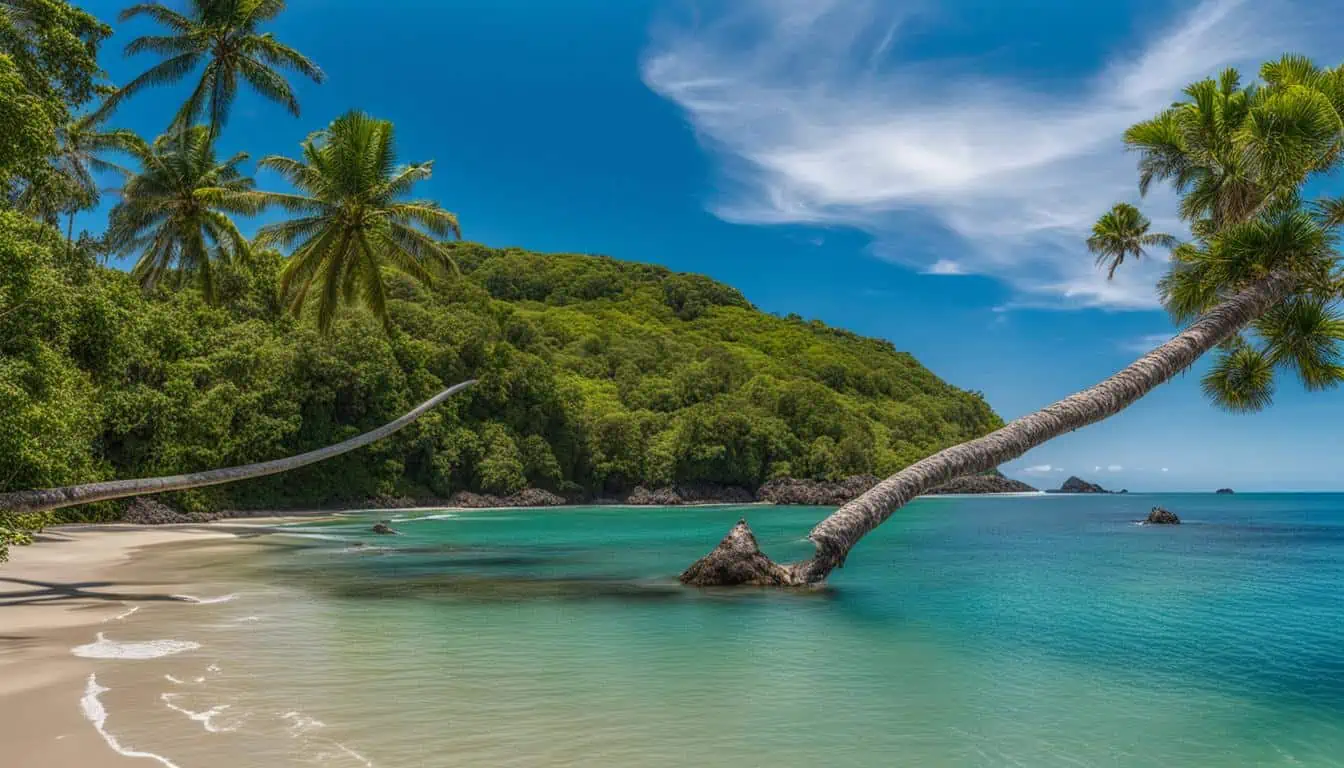
The research then split, and the expedition was no longer just about finding centenarians and determining their exact numbers, but also about the low incidence of cancer and what might be contributing to it. This is an important divergence, and from now on, I would rather focus on the latter. Not only because I don't want to reiterate how important family, a cohesive community, and an active lifestyle are for a long life, but also because the number of cancer cases in Nicoya is truly very low.
You don't need to go to the Sorbonne to establish that cancer and long life are not the closest allies, and if it's already a blue zone, why be so astonished by the fact that people in blue zones get sick less often. This is a perfectly valid point, but it's the proportions here that are astounding. Even in Sardinia's blue zone, there are fewer cancer cases than, say, in Milan, but not to the same extent as in Nicoya. In Loma Linda's blue zone, there are also fewer cancer cases than in Chicago, but not to the same extent as in Nicoya.
However, Bixby and his team weren't completely in the dark, as even before their arrival, they had thoroughly studied a 1958 research published by the University of California, in which an anthropologist named Philip Wagner wrote about the Nicoyan way of life and argued that the people living there owed their longer-than-average lives to the Nicoyan lifestyle. He did all this 40 years before the longevity and blue zone craze, so there are indications that the whole blue zone story didn't really start with George Pes's 1997 Marseille lecture, but then again, this is true not only in scientific but also in musical life. It's not always the person who first writes a song that makes it a global hit.
Wagner's study served as an important map for Bixby and his team, reinforcing their suspicion that the low incidence of cancer was likely due to the Nicoyan diet.
When I compiled the ingredients of the Nicoyan diet, I wanted to do a more detailed and thorough job than ever before. I didn't want to leave out a single ingredient that Nicoyan people typically and regularly consume, because what if it really depends on that? What if the Nicoyan diet can reduce the incidence of cancer? Like a recipe that works, but only if not a single ingredient is missing. Well, it won't be because of me. Here is the list of ingredients for the Nicoyan blue zone.
Black beans, rice, curcumin, carrots, bell peppers, tomatoes, vinegar, tortillas, cassava, cucumber, ayote squash, cilantro, onions, garlic, papaya, coconut, avocado, pineapple, ginger, bananas, oranges, zucchini, lime, sea fish, palm heart, cinnamon, melon, chia seeds, inamona, coffee
That's it. Maybe that's truly all there is to long life and avoiding fatal diseases and changes, if we consistently consume these foods. We tend to doubt that it could be so simple, yet blue zones prove that life lasts longest where diet and life itself are free of frills and closest to nature. People don't live longest in New York, London, or Munich, but in remote parts of the world, where sometimes there isn't even a road. And there's something else, or rather, someone very important. David Rehkopf, a geneticist at Stanford University, who examined the DNA telomeres of Nicoyan people. A person's biological age can be determined from the length of their DNA telomeres. This is how, for example, in forensics or archaeology, the age of a victim or a find is determined from human remains. According to Rehkopf's research, the DNA telomeres of people in the Nicoya region are by far the longest within Costa Rica, and the bodies of Nicoyan people typically appear 10-12 years younger than their chronological age. And who had the longest DNA telomeres even within Nicoya? The poorest people in the Guanacaste Region, who ate nothing else their entire lives but exclusively the ingredients listed above.
In the most developed parts of the world, where medical science is at its highest level, where people have everything available to them, yet people are not running around in droves even over the age of 85. Long life is not where money or economic power is, but where people have remained closest to nature in a civilized form.
This is why I chose the blue zone diet as the foundation of the Tiian lifestyle, because a lifestyle that allows you to live the longest, while maintaining mental freshness and reducing the number of chronic diseases, is all I could ask for, and all you should need.
Everything you need will be here.
