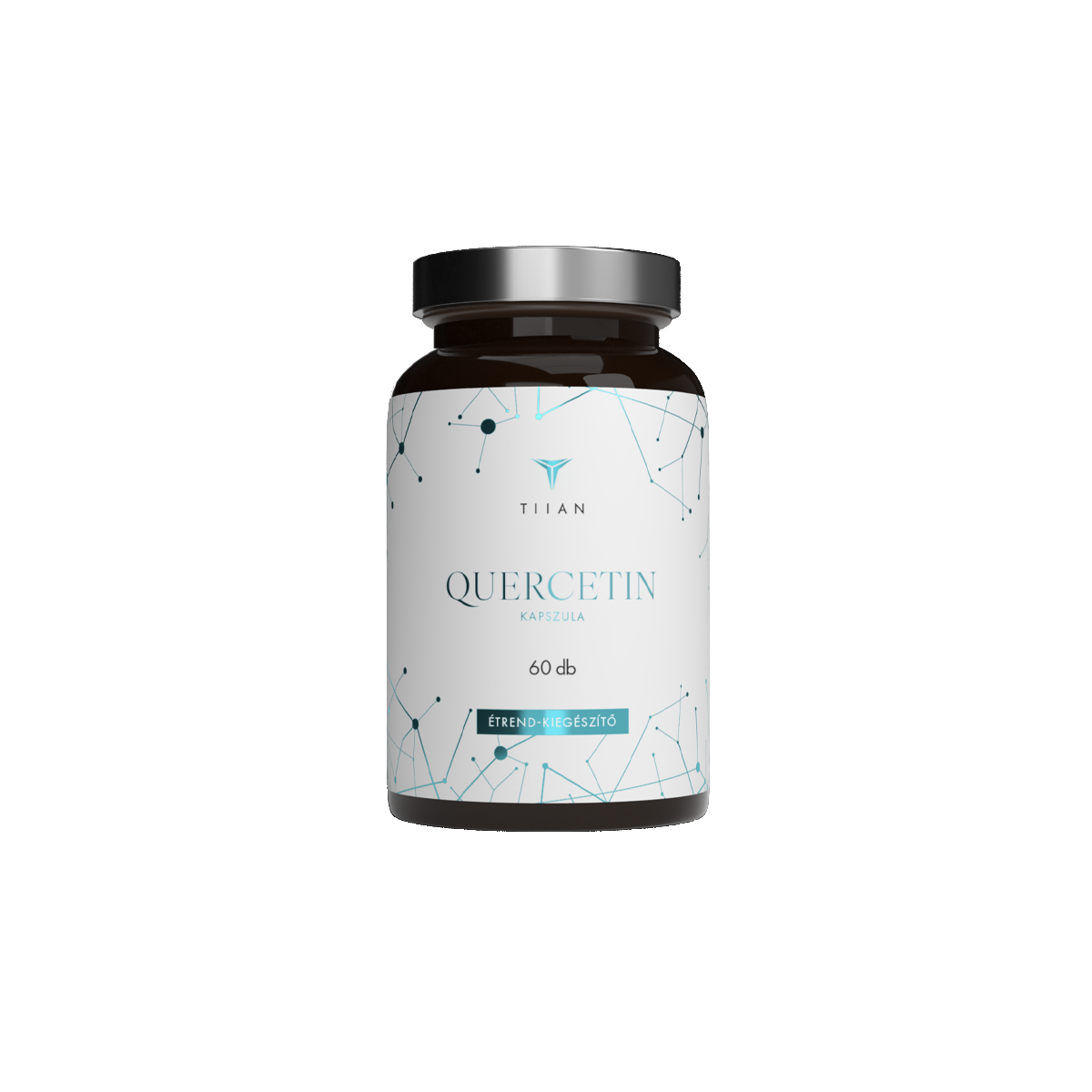
What is quercetin and why is it interesting?
Quercetin is a natural flavonoid compound (from the group of flavonols) found in numerous fruits, vegetables, and herbs. Its name originates from the Latin name for oak (Quercus), indicating that it was first extracted from oak bark. It has been present in the human diet for centuries, but its typical intake is relatively low. Scientific interest in quercetin has grown because it exhibits a wide range of biological effects with low toxicity. Extensive research confirms its antioxidant, anti-inflammatory, antiviral, anticarcinogenic, and immunomodulatory properties.
Moreover, in recent years, it has been revealed that it also possesses anti-aging effects: it may be capable of removing senescent cells, increasing cellular resistance to oxidative stress, activating sirtuin enzymes associated with longevity, supporting the production of neuronal growth factors, and in certain model organisms, it has even extended lifespan (e.g., in yeast, nematodes, and some aquatic organisms).
Biological mechanisms of action of quercetin
Antioxidant and anti-inflammatory effects
Quercetin is a powerful antioxidant: through its electron-donating capacity, it is one of the strongest dietary free radical scavenging molecules. It neutralizes harmful free radicals, reduces oxidative stress, and protects cells from damage. As a result, it reduces age-related cell damage and inflammatory processes. Its anti-inflammatory activity partly stems from inhibiting the overproduction of inflammatory cytokines and key enzymes (e.g., COX-2, TNF-α). Through this mechanism, quercetin can potentially alleviate chronic inflammatory conditions and the so-called inflammaging (low-grade inflammation associated with aging). Many chronic diseases – e.g., atherosclerosis, diabetes, neurodegenerative disorders – are underpinned by persistent oxidative stress and inflammation; quercetin, by moderating these factors, can provide a protective effect at the cellular level.
Senolytic activity (removal of senescent cells)
The accumulation of senescent cells is one of the biological drivers of aging, which damages tissues and generates chronic inflammation. Senolytics are substances that can selectively destroy these dysfunctional cells. Quercetin is one of the most intensively studied natural senolytics, especially often used in research in combination with the anti-cancer drug dasatinib. Interestingly, the effect of quercetin is selective: it does not induce general cell death, but mainly induces apoptosis in senescent and cancerous cells. When administered with dasatinib, they act synergistically because the two active substances target different apoptotic pathways – thus achieving a stronger senolytic effect together. In rat and mouse models, quercetin (especially as part of combinations) reduced markers of senescent cells in tissues, for example, by inhibiting the overexpression of cell senescence-associated genes (p16^INK4a^, p21) and inflammatory SASP factors. In a recent human pilot study, quercetin – targeting the accumulation of senescent cells, one of the causes of age-related vascular damage – improved vascular function in elderly heart patients.
Autophagy stimulation and cytoprotection
Quercetin also influences intracellular autophagy (cellular recycling). Under certain circumstances, by enhancing autophagy, it helps to break down damaged components and optimize energy production processes, which can have a cytoprotective effect. In an experimental diabetic model, quercetin was shown to inhibit the PI3K/Akt/mTOR signaling pathway, which led to the release of autophagy – resulting in reduced liver, spleen, and kidney damage. In other words, quercetin promoted cellular "housekeeping," thereby protecting organs from diabetes-induced stress. Furthermore, its anti-tumor mechanisms of action also include modulating autophagy: in some cancer cells, it inhibits pathological autophagy processes that aid their survival, while in other cases, it enhances programmed cell death through stimulating autophagy.
Its cytoprotective effects also include its beneficial influence on mitochondria (the "powerhouses" of cells). Quercetin neutralizes free radicals generated during mitochondrial function, protects mitochondrial membranes, and according to research, can also contribute to mitochondrial biogenesis (the formation of new mitochondria). Furthermore, it has neuroprotective properties: it crosses the blood-brain barrier, reduces inflammation and oxidative stress in the brain, and increases the levels of neural growth factors such as BDNF and NGF. In a mouse experiment, quercetin improved learning and memory functions in aged animals, reduced free radical levels in the hippocampus, and increased the concentration of brain-derived neurotrophic factors (BDNF, NGF), indicating protection and regeneration of nerve cells.